
Every fortnight or so we’ll bring you some technical updates that we hope you’ll find useful.
Today’s topics are a review of the recently released IAB Tech Lab buy-side transparency standards, an overview of how Google intends to test the Federated Learning of Cohorts (FLoC) proposal as the origin trials have now kicked-off and a look at how publishers are currently utilising prebid.
Buy-Side Programmatic Transparency Standards are now out
IAB Tech Lab have now successfully released two new buy-side transparency standards – with the intention to functionally provide full transparency for sellers into the buy-side of programmatic buying and work alongside the Ad Product Taxonomy.
What are the expectations of DSPs?
DSPs are expected to:
- Post and maintain a buyers.json file on their root domain
- Expose buyer seat IDs in all bid responses.
- Expose ‘data-ad-creative-source’ identifiers in ad markup in all bid responses.
- Initiate DemandChain Objects (complete ones when possible) and include them in all bid responses.
DSPs (and other intermediaries between the buyer and the content publisher) should post the buyers.json file on their root domain and the file should be constructed as valid JSON (consistent with the buyers.json specifications) and list all and any entities that are able to purchase ad impressions through the platform. The fields include variables such as ‘buyer_id‘, ‘buyer_type‘ and also the primary web domain of the buying entity.
The buyers.json file should be updated in a timely fashion whenever buyers that may appear in bid responses are added, and no more than one day thereafter.
What are the ‘Data-Ad-Creative-Source’ identifiers?
Publishers can seek the ‘data-ad-creative-source’ string which precedes identifiers that can enable publisher AdOps teams to clearly reveal which DSP has won an impression, along with the identity of the buyer on that DSP, and the specific creative ID. Be aware that multiple creatives may serve on any one web page.
How can sellers utilise the DemandChain Object?
The DemandChain Object enables sellers to see all parties who are involved in buying the creative embedded in a given bid response – and is composed primarily of a set of nodes where each node represents a specific entity that participates in the purchasing of an impression. The entire chain of nodes from beginning to end represents all entities who are involved in the direct flow of payment for the impression and the creative that runs within it.
A complete DemandChain includes every intermediary between the ultimate payor (typically a brand or self-serve advertiser) and the ultimate publisher. In a comparatively simple case this might be represented as:
Advertiser -> DSP -> SSP -> Publisher
In a particularly complex case it could be:
Brand -> Agency/Holdco -> DSP of record -> additional reselling DSP -> SSP/agg1 -> SSP/agg2 -> SDK provider -> Publisher
Ultimately the information that can be predictably interrogated will be:
• DSP domain (dsp_domain)
• buyer seat ID (buyer_seat_id) which should be the buyer seat ID on the DSP’s platform. Normally this is the value used in the BidResponse.SeatBid.Bid.seat field in the bid response, and also a bsid value present in the DSP’s buyers.json file)
• creative ID (creative_id) which should be the unique identifier that the DSP uses to identify a creative, typically the BidResponse.SeatBid.Bid.crid value in the bid response.
For more of a general introduction to these standards visit our recent blog and member Q&A article
Google FLoC Trials
Google have just recently announced that the initial testing of FLoC will be taking place (Chrome versions 89 – 91) until 14th July 2021. The trials will be run with a small percentage of users in Australia, Brazil, Canada, India, Indonesia, Japan, Mexico, New Zealand, Philippines and the US.
Google have proposed FLoC as a solution for enabling interest-based advertising on the web once third-party cookies are no longer viable as highlighted recently in two of our blogs.
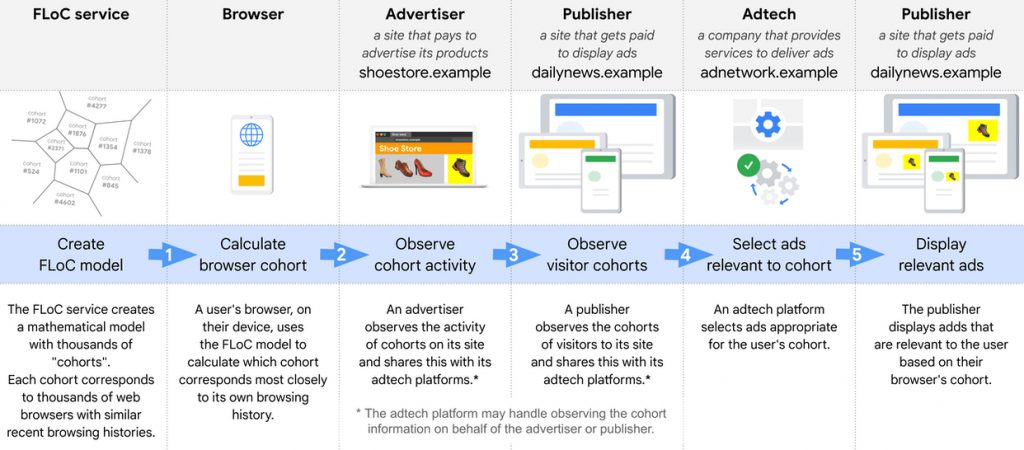
Chrome will introduce a control within the browser settings that people can use to opt out of being included in FLoC and other Privacy Sandbox proposals. Until then, anyone that’s chosen to block third-party cookies will not be included in these origin trials.
Google are confident that FLoC can be effective whilst reassuring consumers of their privacy by:
- Users being part of a crowd
- FLoC doesn’t share user browsing history with Google or anyone else
- Chrome browser won’t create groups that Google deems sensitive
You can learn more from Google’s new dedicated Privacy Sandbox site
Some Insights into how Publishers use Prebid
The global survey, conducted by OpenX, generated responses from 381 ad ops experts within their global publishing community – with 36% coming from large publishers that generate more than 1bn ad requests per month.
When contrasting answers from large publishers with those from smaller publishers, it is clear that large publishers are able to experiment more in order to drive as much revenue as possible.
Highlights from the report included:
- Only 8% were very satisfied with the programmatic revenue they were currently bringing in.
- Only 18% of publishers felt that they were getting everything out of Prebid that they could.
- More than 50% of publishers feel like it’s hard to get actionable insights from Prebid and only 4% felt strongly that they could easily get these insights.
- 42% of publishers would like to change their Prebid setup more frequently. Smaller publishers are three times more likely to never update their stack than a publisher with over 1Bn requests per month.
- There are mixed feelings about how difficult Prebid is to manage. 37% of publishers feel that Prebid is too time consuming to manage.
- 27% of publishers feel it remains difficult to set up.
- Publishers with more than 1Bn requests per month were more than twice as likely to use multiple Prebid configurations than publishers with less than a billion monthly requests.
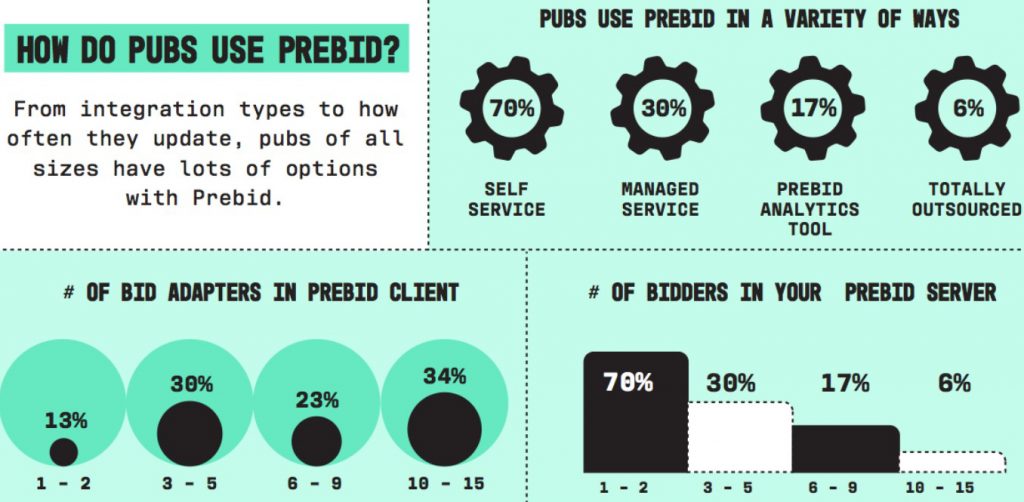
To view a full infographic of these findings simply click here