

Every fortnight or so we’ll bring you some technical updates that we hope you’ll find useful.
Today’s topics are the Shared Campaign Identifier, Amazon Advertising’s products and the Index of UK Independent News Publishing.
SCID (Shared Campaign Identifier)
IAB Europe have been working with IAB Tech Lab to try and improve transparency and tracking for any programmatic buying and selling – by using a key for identification and reporting throughout any ad campaign’s lifecycle.
The SCID key is created by merging the following variables:
Advertiser ID + Advertiser brand + Advertiser product code+ Customer Product Estimate + Ext (optional)
Advertiser ID: This is the GLN (global location number), which is an existing international ID used to identify a company (advertiser). The registry of GLNs is managed by GEPIR (Global Electronic Party Information Registry), which allows identification of a company thanks to its GLN.
Advertiser Brand, Advertiser Product Code and Customer Product Estimate: these are all defined at the advertiser’s discretion
An example SCID from a campaign through Publicis for Nestlé for the Olympics Games in 2020 would be:
0050000000951+Nestlé+OG2020+Publicis
The advertiser would then send over a media brief with its own information (brand, product, targeting etc.) to the trading desk to execute. This brief must contain enough data to generate the SCID.
Using the brief, the trading desk sets-up the campaign within the DSP and ensures that the SCID is present and passed through into any resulting Bid response.
During and/or at the end of the campaign display, all the intermediaries within the programmatic chain can compare the data using the SCID.
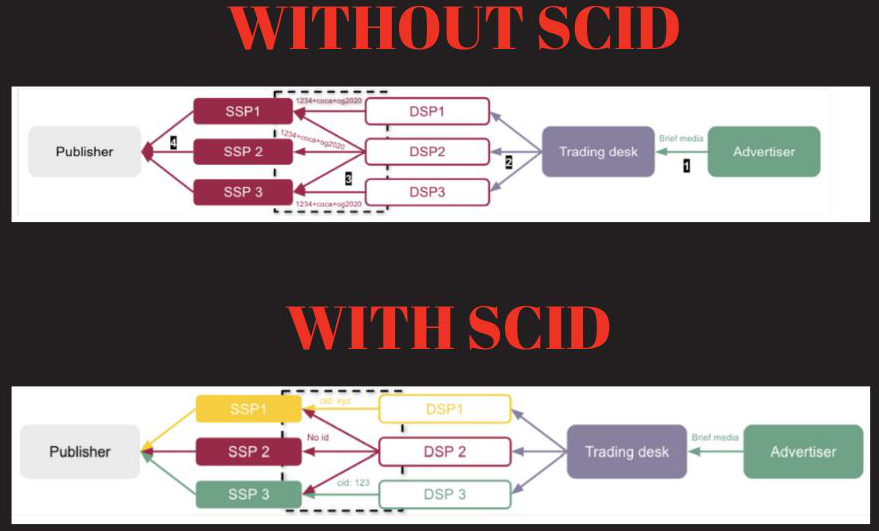
We’ll be keeping an eye on the levels of adoption of the SCID in Europe and how committed buyers prove to be to the process. If successful we will certainly consider reviewing the option of rolling it out here for trial, most likely in conjunction with the MFA and AANA.
Amazon Advertising Products
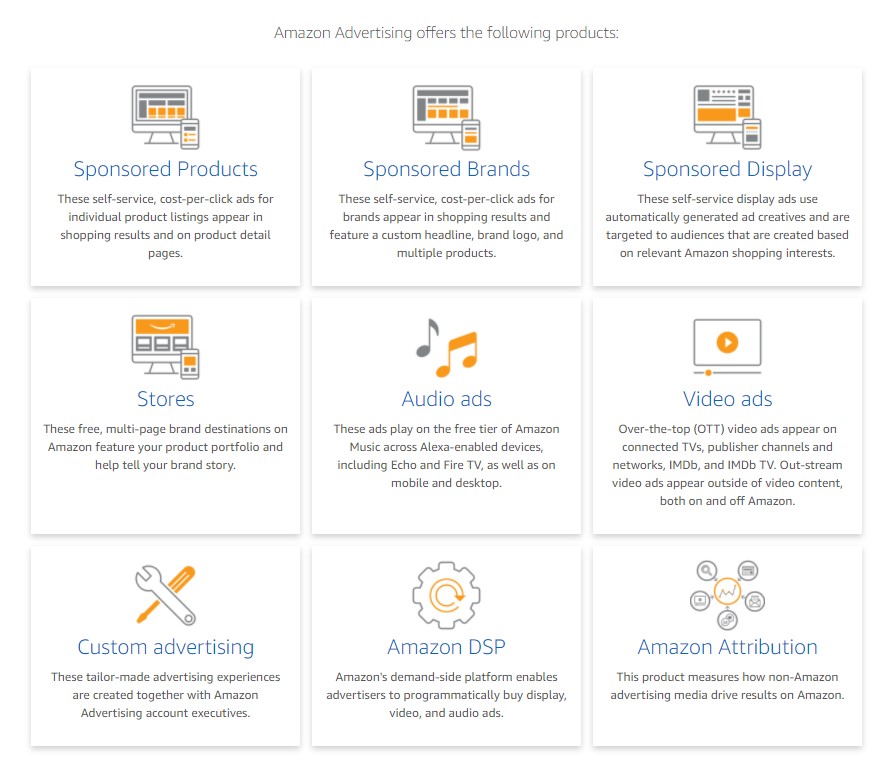
Amazon Advertising’s annual global ad revenues are currently being estimated at over $22bn USD and they have been active launching a Partner Network program and have been providing client access to their Advertising API for some time now.
Hence we wanted to provide a quick overview of how the products are evolving. Firstly, the range on offer includes a expected mix of retail-related solutions across their owned and operated entities (including audio via Alexa) and some additional capabilities which also include extension.
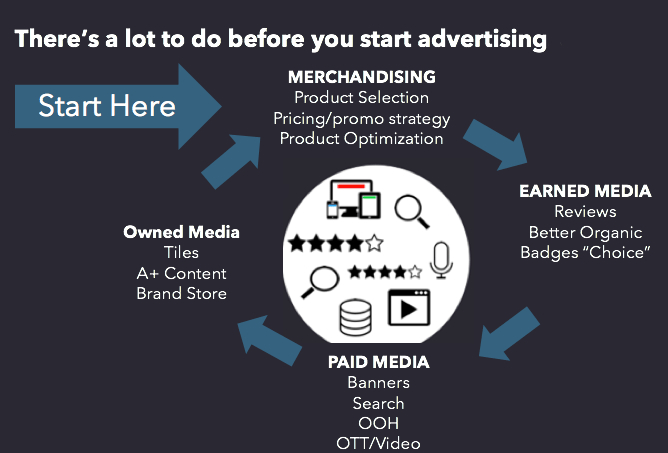
As one would imagine, the recommended starting point in terms of strategy is highly retail focused. This slide was grabbed from a presentation from iCrossing at a recent event in the US:
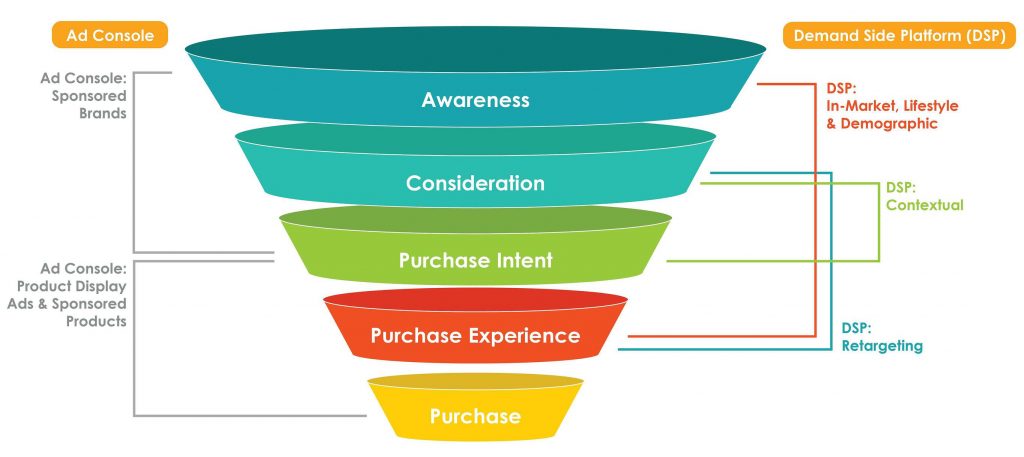
Utilising the mandatory funnel image the soutions are mapped out as per the below across their standard products and the Amazon DSP.
In terms of campaign management and the options for leveraging keywords with other variables and then reporting on results, some related options are listed below:
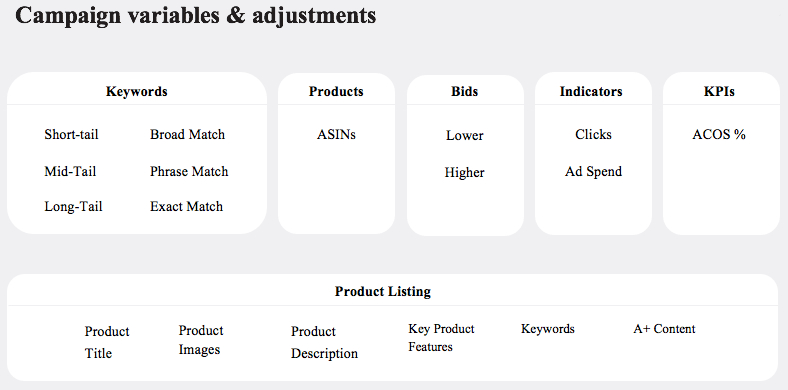
The consistent core and proprietary advertising metric for Amazon is Advertising as a Cost of Sale (ACOS), as it’s one of many costs of sales for retailers – which can also include pricing, warehousing, shipping and delivery.
UK Independent Publishers Report
The Public Interest News Foundation in the UK have now released the findings of their survey of UK independent news publishers and the findings are interesting. We’ll be looking to try and provide more support, resources and information for Australian smaller-to-mid-size publishers in the coming months.
Many of these publishers are operating on minimal budgets, with their median annual income of just the equivalent of $75k AUD.
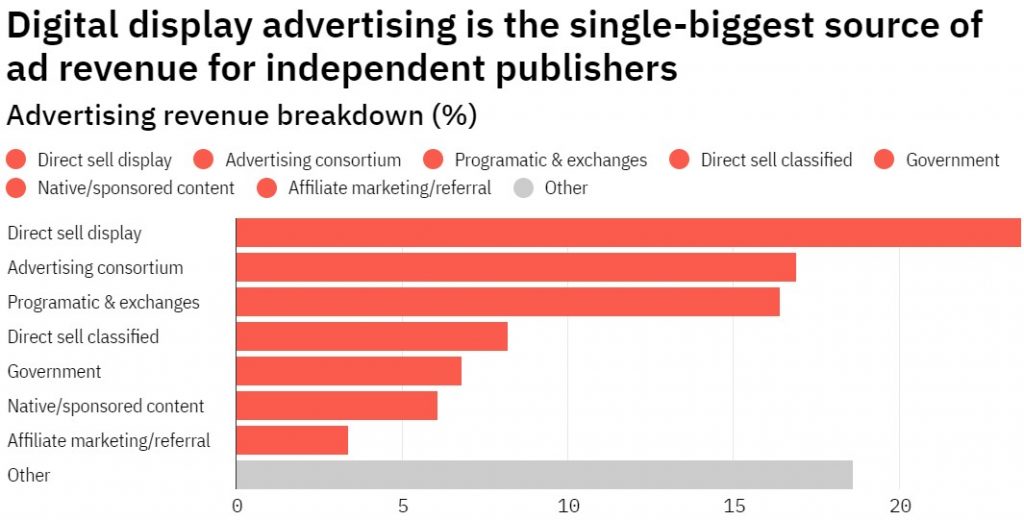
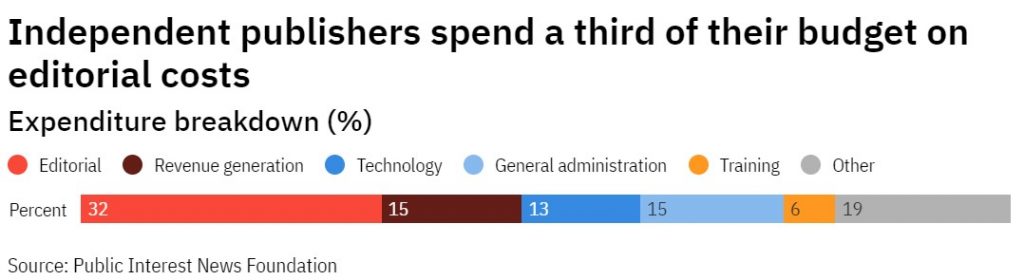
Using 32% of their total expenditure on editorial costs, each publisher produces an average of 1,000 pieces of content each year and reaches a median of 36,000 unique users each month. Many said they also found it hard to compete with the global platforms or to persuade them to verify them, making it harder to monetise their content.
In terms of post-pandemic opportunities the report also highlighted these key points:
- Almost a third (30%) of publishers in the survey said their biggest opportunity in the next five years was to take advantage of the public’s post-Covid awareness of the importance of local journalism.
- The responses highlighted the opportunity for independent publishers that have ‘genuinely connected audiences’, saying many of them are covering news stories that may otherwise go untold.
- Others expect to take advantage of any negative feelings towards the so-called mainstream media, with 14% saying this was their biggest opportunity.