
Every fortnight or so we’ll bring you some technical updates that we feel you’ll find useful.
Today’s topics are a review of Google’s total future commitment to anonymised Audience Cohorts, how ACR technology in TV is progressing and a review of the recent AANA/MMi report on transparency.
Google’s Confirmation on Audience Cohorts
This morning’s announcement from Google now confirms that once Chrome blocks the use of third-party cookies, the only approach Google will enable for the targeting and measurement of digital ads that are not via consensual first-party data – will be executed via anonymised audience cohorts through the Privacy Sandbox.
We’ve covered both the evolution of Privacy Sandbox and audience cohorts with regularity recently however this confirmation today dramatically prioritises the anonymised cohorts approach for all things identity and targeting & measurement moving forwards.
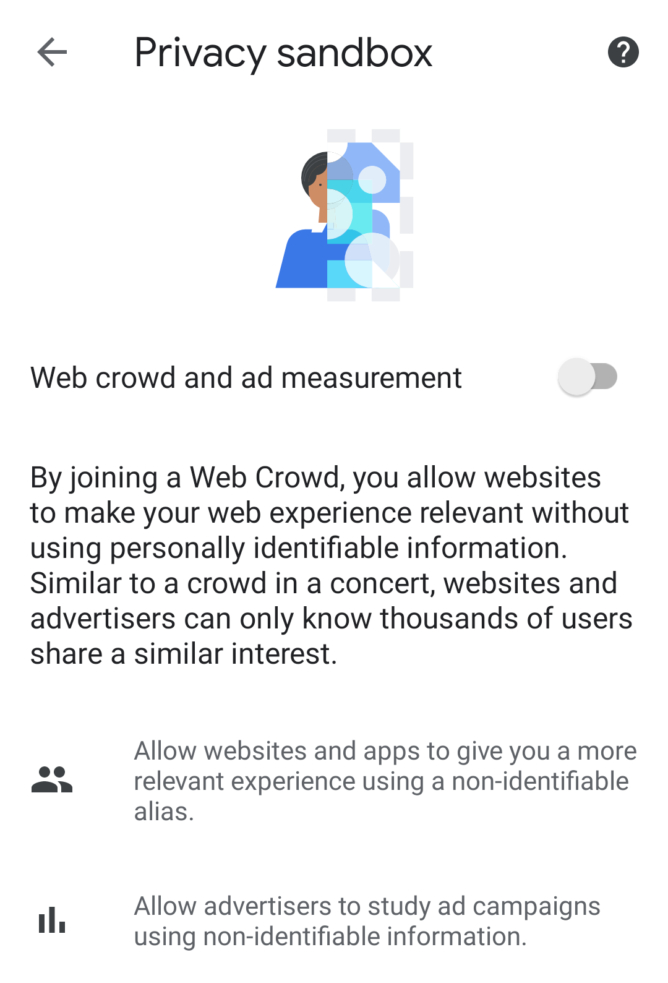 Added to this are the limitations of 50 users or more, already in place, on any query results within Google’s Ads Data Hub against CRM data. This approach to managing first-party data also aligns with the overall approach and this is now a full future commitment to consumer privacy.
But what does this now mean for the various parts of our industry moving forwards?
Publishers – a full commitment to a competent first-party data strategy remains paramount with an increased focus on the full value of anonymised contextual and behavioural signals.
Advertisers – will have to navigate an increasingly fragmented future landscape for their campaign targeting, management and attribution. Fuller investment into data science and analytical tools and a commitment to key supplier partnerships is advisable.
AdTech Vendors – education and a commitment to consumer privacy by design.
Industry overall – a commitment to the collaborative testing of audience cohorts and their various iterations and a unified adoption of the IAB Tech Lab’s audience & content taxonomies for consistency.
The work of Project Rearc continues as planned, focusing on the three core approaches (authenticated consumers, anonymised contextual and audience cohorts) but hopefully now we’ll see a greater commitment to the collaborative testing of all of these capabilities. To read a recent update from IAB Tech Lab on this announcement just click here.
We’ll be looking to launch a dedicated working group to support IAB Tech Lab’s testing of audience cohorts (as well as authenticated users and anonymised contextual solutions) next month. We are also hosting a panel discussion on this core topic at the Programmatic Summit in Sydney on March 11th.
AANA/MMi report on transparency
A recently released report from AANA, in conjunction with MMi, has tried to look at how transparent ad spend is across the supply path here in Australia.
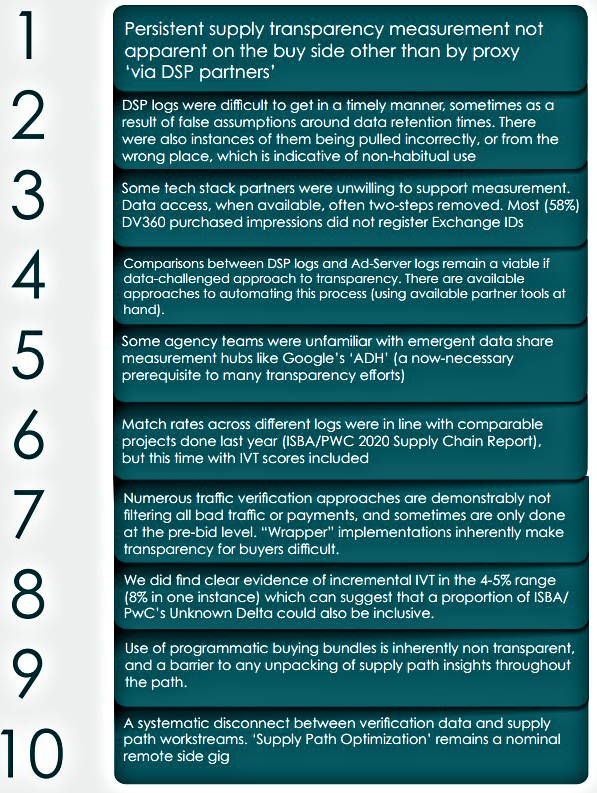
The findings (see image below) provide some local data points to the ISBA/PwC study run in the UK last year but in truth there’s nothing new to the approach or results. There was no reference to either the supply-side’s various programmatic transparency standards that are now in common use nor the various IAB Tech Lab Taxonomies that are available. You can access the report via the AANA website, some coverage here and below are some of our resulting recommendations.
1. Adoption & usage of the transparency standards already in place
We recommend buyers only target inventory sold through ads.txt and app-ads.txt authorised channels. This ensures that:
– the inventory is not being spoofed at the domain level.
– the inventory can be further verified.
We then also recommend that buyers only work with SSPs and exchanges that have posted their sellers.json files for buyers to review. This ensures that:
– the identity of the final seller of a bid request can be discovered via a review of the ads.txt and sellers.json files.
– buyers can review the SupplyChain object and verify all the identifiers within sellers.json files, enabling buyers to see all parties who are selling or reselling a given bid request.
This setup enables full supply-path transparency for audit, review or as data for improved SPO practices.
2. Work Closely with all your partners
Working together with DSP vendors to ensure setup is correct and agency partners to ensure both the competent execution and interrogation practices are in place is important (i.e SPO). Then also working with the supply-side partners (SSP’s & Publishers) to have regular and efficient access to premium transparent inventory that meets your needs. Not everyone has the resources to leverage all the path optimisation tools available – but if major buyers are really serious about transparency and media quality then the tools and capabilities are available – and the transparency standards remain the operational foundations for this.
3. Consistent naming conventions and taxonomies
We recommend the audience and content taxonomies managed by IAB Tech Lab and also the Data Label initiative for any audience segments.
4. Further industry tools are coming to help manage these transparency standards
A Transparency Centre will be launched this year by IAB Tech Lab, which will essentially give users access to the ads.txt aggregator and sellers.json validator which can fully verify that the setup on the supply-side is 100% correct. We will shortly be forming a small working group here in AU that can get beta access to the programmatic transparency centre and help amplify it’s understanding, usage and value.
5. Buy-side transparency standards are on the way
Similar standards (i.e. buyers.json) to also enable full transparency on the buy-side by allowing sellers to see all parties involved in buying the creative. These are in now development by IAB Tech Lab and IAB AU are very keen to be a launch partner for these standards once released and fully tested.
10 Findings from the Report:
Automatic Content Recognition Technology
ACR technology remains fairly new in Australia, but it’s starting to become better known – particularly since Roku have recently taken ownership of Nielsen’s Advanced Video Advertising business. This acquisition gives them access to capabilities such as Nielsen’s video automatic content recognition and dynamic ad insertion technologies (DAI).
ACR software requires user permission from smart TVs and once enabled can regularly log pixels and audio snippets from what consumers are watching on the TV and match them against the database of content that is being delivered at that time. By intermittently interrogating these resulting anonymised data sets one can ascertain what content and ads are actually being watched by any users, what the IP address of the connected TV is and whether or not the content being consumed is linear, OTT or via an app (or even a video game).
This provides exclusive viewership data for advertisers to use for their planning, buying, activation and attribution efforts. Matching IP addresses against physical households data can even provide some insights into resulting sales uplifts post-campaign. However there are limitation currently in terms of scale of adoption, not only based upon the ACR software opt-ins and consumer privacy – but also in the layers of technology required to join the dots. The other current blocker is ensuring that all the local content being delivered at any time is made searchable at scale.
We’ll be reviewing the local evolution of this technology in the IAB Australia video council on an ongoing basis.